Yes, the istanbulkart is worth buying, but the condition is not the one most pages give you. It comes down to how many of you there are. Two or more people sharing one card, a longer stay where you ride most days, or any chance you return to Istanbul: buy it. The card costs 165 TL and every ride on it is a flat 46.20 TL.
Some people should skip it. Travelling solo for two or three nights, walking most of Sultanahmet, taking a handful of isolated rides? A 10-ride limited-use ticket book works out at 53 TL a ride against the kart’s 46.20 TL, a gap too small to recover a 165 TL fee on a short trip.
One forum traveller did 10 or 11 rides over a week, decided the topping up was not worth the hassle, and tapped his bank card at 65 TL instead. Perfectly sound conclusion.
I used this card almost every day through the decade I lived in Istanbul, and I still check the official tariff before I touch this page. Every lira figure below comes from the city tariff effective 20 July 2026. And one thing most guides still tell tourists about this card stopped being true on 1 January 2023.
Ahead: the real break-even math, that expired promise, what to do about leftover credit before you fly home, and the one scam that targets people at top-up machines.
Step 1: Do the Math Before You Buy
The cheapest İstanbul City Card costs 855 TL for one day. Against a 46.20 TL ride, that pass needs roughly 18 rides in a single day before it beats simply using an İstanbulkart. A Turkish commuter crossing the whole city and back does not come close.
Four products, one realistic trip:
| Option | Upfront | Per ride | Verdict |
|---|---|---|---|
| İstanbulkart | 165 TL | 46.20 TL | Best for groups (up to 5 share one card), longer stays, repeat visits |
| Limited-use tickets | none | 53 TL (10-ride) | Cheapest for one person on a short trip |
| Bank card tap | none | 65 TL | Easiest, most expensive |
| İstanbul City Card | 855 TL/day | included | Only pays off at ~18 rides a day |
Solo and short, the tickets are cheaper. The kart saves 6.80 TL a tap against the ladder’s best rate, so one person needs about 24 taps to clear the 165 TL fee, and the ladder only sells up to 12 rides. Solo, you never get there. Against contactless the card wins fast: at 18.80 TL a tap, the fee is back in about nine.
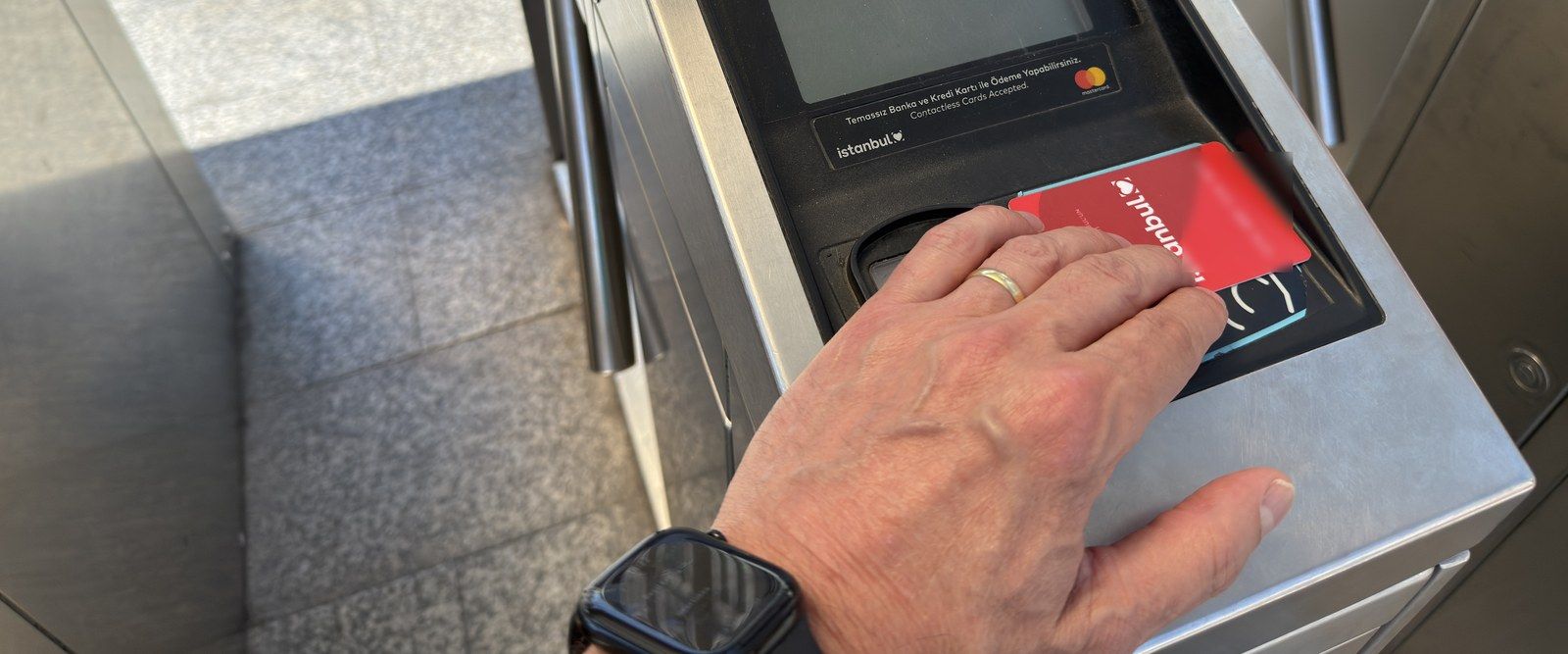
But that break-even is a group total, not a per-person one. Up to five people tap the same card in sequence, one fee covers all of them, and nothing is diluted by sharing, because the anonymous card earns no transfer discount for anyone to lose. Two people split it into about 12 taps each, which a three-day trip clears without trying. Four people need roughly six each.
The spreadsheet misses something legitimate too: no rungs to count down, no ticket book to re-buy mid-afternoon, no gate declining your foreign contactless card. Call it convenience you are choosing to pay a small premium for.
The City Card is the one readers confuse with the kart. One plastic per person, hard expiry, no top-up, no sharing. For a family of four, a 3-day City Card is 6,640 TL against one shareable İstanbulkart at 165 TL plus rides.
Best for: two or more travellers, anyone riding most days, anyone expecting to come back. Skip if: you are one person here two nights, walking Sultanahmet.
Step 2: Buy the Card at a Biletmatik Machine
You have landed, you have no lira, there is a queue at the one machine that appears to be working, and the signage is in Turkish. Highest-friction moment of the trip, and it genuinely takes ninety seconds.
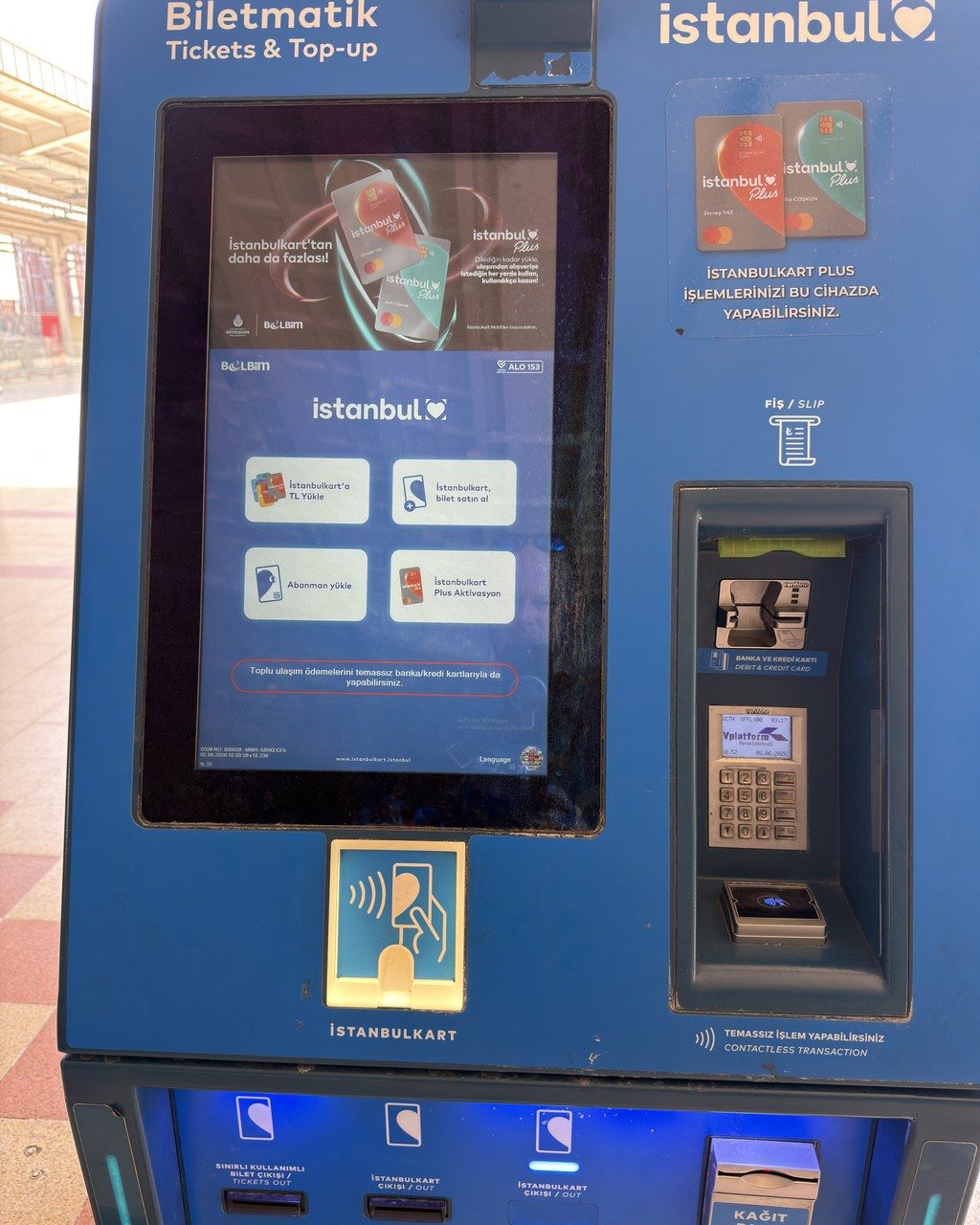
The machines are called Biletmatik, which just means ticket machine, and they sit at every metro, tram and ferry station. Do not go looking for a colour. Both generations are in service: older yellow machines, reliable with cash and rarely accepting cards, and newer blue 2026 machines that usually do take cards. At IST airport they are on floor -2, the arrivals level, near the metro entrance and bus terminals.
Cash always works, and card acceptance varies machine to machine. Machines take 5 to 100 TL notes and no coins, so have small notes in hand before you reach the front.
The screen sequence: pick your language (English is there), choose the anonymous card option, and the machine shows the 165 TL plastic fee. Pay. Then a separate prompt asks how much travel credit you want on top. That second prompt is where people go wrong, and plenty walk away holding a brand new card with nothing on it.
Two Turkish words worth recognising: Onay, confirm, and Kontör Yetersiz, insufficient balance. The card drops out of the slot and works at any turnstile immediately.
Landing at IST with no lira? Draw 100 TL from an arrivals-hall ATM before you reach floor -2, then buy from the machine.
Now put money on it. Less than you think, for a reason that will annoy you if you find it out at the airport on your way home.
Step 3: Top Up Small and Often, and Try to Land Near Zero
Every guide tells you to load 300 or 400 lira and stop thinking about it. That is how people donate money to Istanbul’s transport authority on their way to the airport. Whatever is on the card when you fly home stays there.
This is a closed door, not laziness on your part. A refund means an application-centre visit, an ID copy, a signed IBAN form, five days for a transfer minus a fee. The consolation: the card never expires, so come back and that leftover 40 TL is waiting, no new 165 TL fee.
So how much? At 46.20 TL a flat tap, four taps is 184.80 TL. Load a day at a time and top up when the turnstile screen shows you getting low. Under-loading costs a minute at a machine you are passing anyway; over-loading costs you permanently.
On your last day, count your taps, add one, stop.
The mechanics: card on the reader pad, insert notes or pay by card, then wait for the new balance before lifting the card. Expect a small transaction fee at some machines: when we loaded 200 TL, 198 TL landed on the card, with the machine’s own menu showing a 2 TL işlem ücreti, transaction fee. Machines that debit without crediting are a live August 2026 complaint.
The ticket-helper scam, and the one-sentence fix. Someone friendly offers to help you work the machine, takes your card, and hands back a different, empty one while keeping the card you just loaded. Often a pair, one chatting to your companion while the other swaps. Documented at Eminönü, reported around Sultanahmet, Sirkeci and Tophane.
The fix: never hand your card to anyone who was not behind a counter, and ask uniformed staff if you want help. This is a handful of people at a handful of spots, not a city out to get you, and once you know the move it stops working.
Keep the card in your own hand, and fly home with it nearly empty.
Now, what card are you actually holding? Most of what you have read online is about a different one.
Step 4: The Transfer Discount Myth, and Which Istanbulkart You Can Actually Get
You have probably read that your second ride within two hours costs less. On the card you just bought, it does not. Every tap is 46.20 TL, first to last. The discount is real, it is simply not yours.
It was withdrawn from anonymous cards on 1 January 2023, per the İBB transport authority’s own announcement. The 120-minute cascade still exists for personalized cardholders (46.20 TL, then 34.40 TL, 26.42 TL, then 17.18 TL) but those are not fares you will pay.
Which brings us to the card family, where readers arrive already tangled:
- Red anonymous card. Sold from every Biletmatik, no registration, no ID. The tourist card. Flat fare, shareable by five people, no transfer discount.
- Personalized card. Your name and photo, requires a Turkish ID number (TCKN) or foreigner ID number (YKN). Gets the cascade. A short-stay visitor cannot get one.
- Discounted, student, teacher and 60+ cards. Status-gated to enrolment, employment or residency. Using one you are not entitled to is a fine, not a hack.
- Mavi Kart. A resident monthly unlimited pass, not a tourist product.
Everything a visitor can buy sits in the first row, and that row is the flat-fare row.
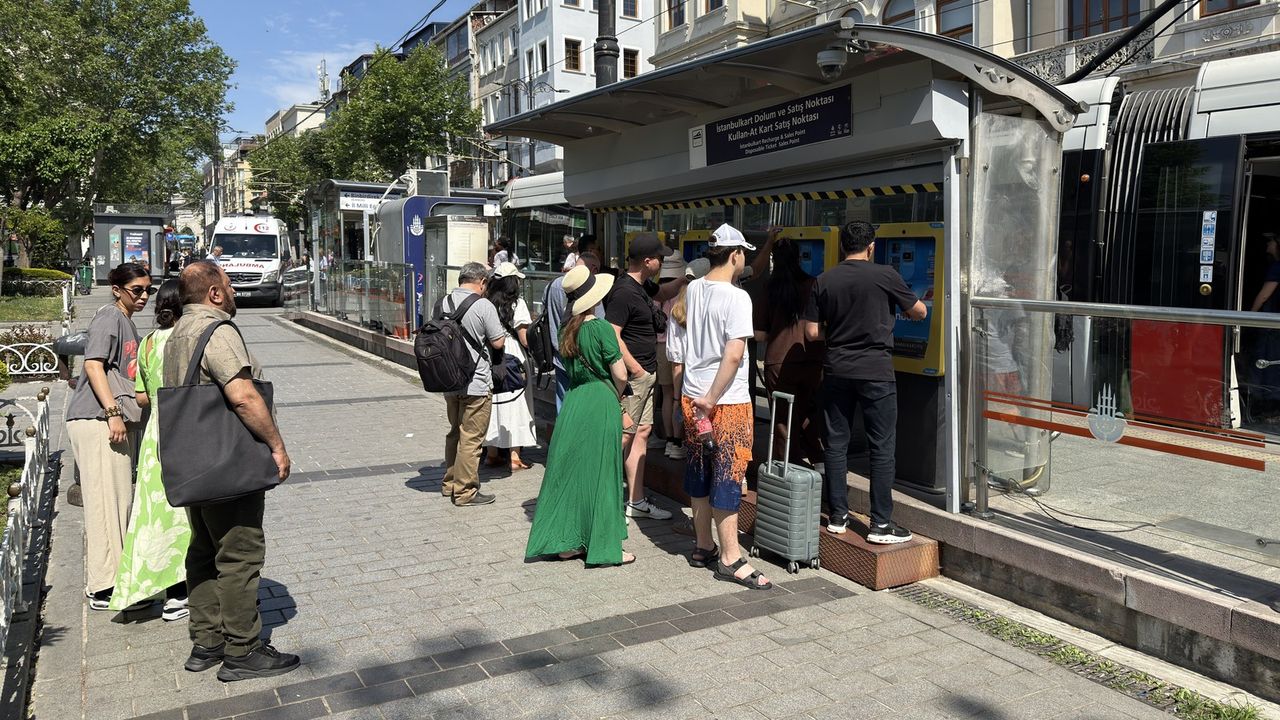
In plain money: a three-leg chained trip, tram then metro then funicular, costs three full fares. That is 138.60 TL, not the reduced total other pages imply. Which is why sharing is the card’s real economic advantage: nobody is getting a discount, so nothing is diluted when a second person taps the same plastic.
Two edges. The Metrobus charges its own flat rate, and Marmaray charges by distance. A 30-minute rule also governs re-tapping the same card at the same point, covered in Step 7.
A contactless bank card gets no cascade either, pricing every tap as its own limited-use ticket at 65 TL. The kart is still cheaper.
Now the part where the card earns its keep: coverage.
Step 5: Use It on Ferries, Marmaray and the Airport Buses
The most scenic thing you can do in Istanbul is ride a public commuter ferry across the Bosphorus, and your transit card pays for it at a fraction of what a tour boat charges for the same water.
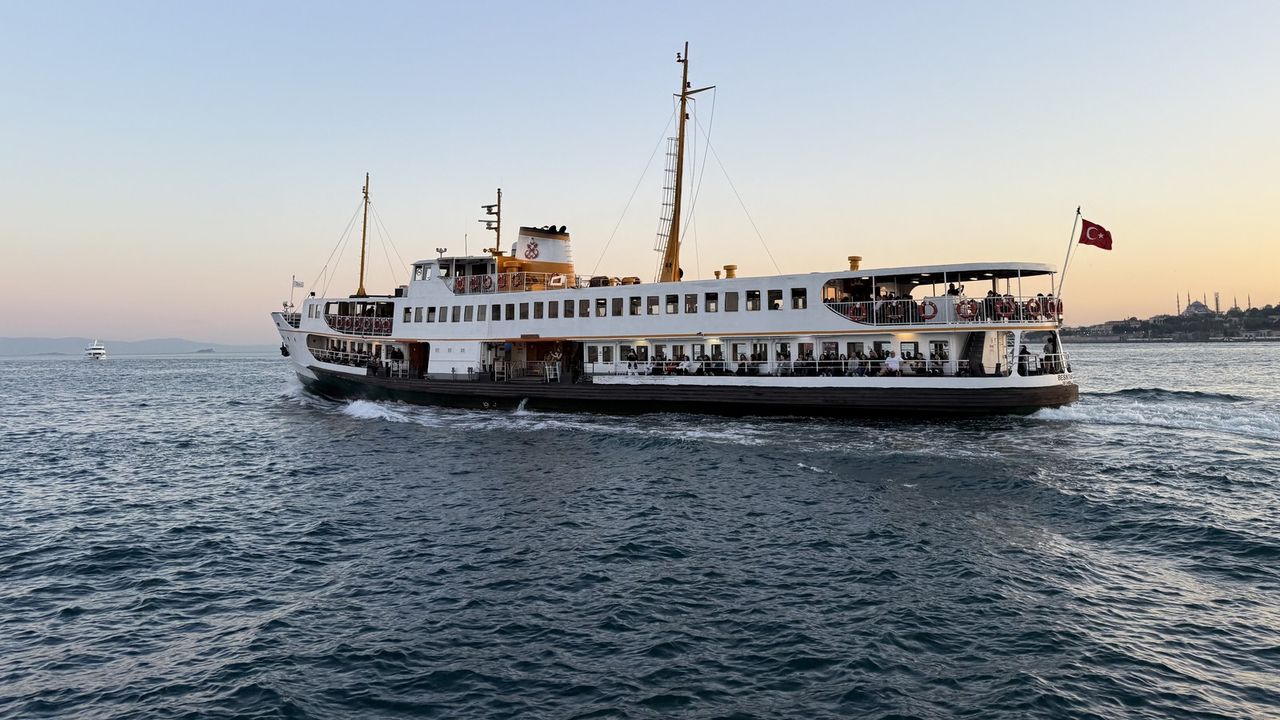
The card covers metro, tram, bus, Metrobus, the funiculars, the Tünel (the short historic underground funicular at Karaköy), Marmaray (the train running under the Bosphorus between the two continents), and Şehir Hatları commuter ferries. It also works at thousands of shops, cafés and parking points.
This is the part a per-ride table cannot capture. One piece of plastic covers every mode in the city including the water, with no ladder to count down and nothing to re-buy mid-day. That is Step 1’s convenience premium, made concrete.
One thing it does not cover, and it catches people at the airport: the İstanbulkart is not valid on Havaist airport buses. Pay by credit or debit card tap when you board. Cash is not accepted on board either, so arriving with a pocket of lira and no working card is a genuine problem. The old HVIST-11 route is discontinued; current routes carry HVL prefixes. Deeper airport-transfer detail belongs in that guide.
Private Bosphorus tour boats, sunset cruises and dinner yachts are a separate commercial world with their own tills, and easy to mix up with the commuter ferries when both tie up at the same quay. I am not quoting individual ferry route fares here, because the operator’s own tariff page has been unreachable to verification and stale prices help nobody.
Best for: anyone crossing the water even once, which should be everyone. Skip if: what you want is a booked cruise with dinner on it.
Step 6: The App and Digital Top-Ups, and Why Tourists Should Not Rely on Them
The İstanbulkart app is the most common source of tourist frustration on this topic, and it is not just tourists. Turkish users were venting about it publicly the same week I refreshed this page, in language I will not reproduce here.
When it works, it is excellent. Hold your card to the back of your phone to top up over NFC, check your balance, load passes. Most recent Android phones and iPhones handle it. That makes Step 3’s small-and-often approach painless, fifty lira from a café table.
The problem is getting in. Many short-stay visitors report they cannot complete registration, or cannot get a top-up to go through on a foreign card. Why that happens is not something I can confirm from an official source, and I am not going to invent a mechanism for it.
Treat the app as a nice-to-have. Machines take cash and a wide range of international cards, need no registration, and are never more than a station away.
The app needs data, and standing at a Biletmatik with no signal is a bad moment to discover your roaming is off. I have tested Holafly against Airalo and Holafly is the one I use, so get one of its unlimited data eSIM plans for Turkey before you fly. Since July 2025 Turkey has blocked many eSIM sellers’ websites, so install it before you arrive, not after landing.
Here for a week? Use the machines and skip the app.
Which leaves the group question, the highest-value thing left to get right.
Step 7: Share One Card Across Your Whole Group
You probably do not need four cards. One will do, and it saves three card fees before anyone has taken a ride.
Up to five people can tap the same card in sequence at a gate. Everyone taps individually; it is not a group pass that opens one barrier for four bodies. Three card fees at 165 TL each is 495 TL you keep, and unlike the City Card there is no per-person plastic.
You have almost certainly read the opposite, that only the first person on a shared card gets the transfer discount. It does not apply here, because nobody on the red anonymous card gets one. Every tap is 46.20 TL, first person or fourth.
The real tradeoff is logistical. One card means staying together, and if you split up, somebody is stranded at a turnstile. Step 4’s 30-minute same-point rule is the one mechanical catch: fine for a group tapping through in sequence, but you cannot pass the card back through the barrier to someone who already came out.
Best for: families and couples moving around together. Skip the sharing if: you are splitting up. Buy two cards and you lose only the second fee.
Buy the card if there are two or more of you, load it a day at a time, and it will quietly handle every tram, ferry and metro you need. Enjoy your stay.